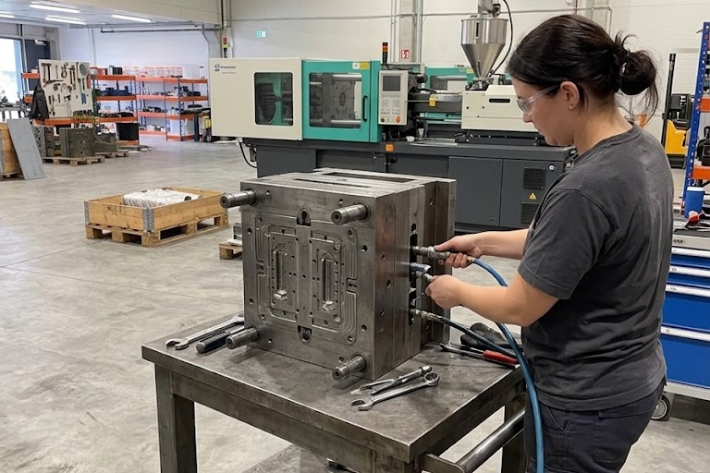
Lead times play a crucial role in any manufacturing project, making it essential to understand the timelines associated with different types of injection moulding moulds for effective production planning and scheduling. Whether you’re introducing a new product, validating a design, or gearing up for high-volume manufacturing, having a clear idea of the expected lead times for prototype, bridge, and production moulds can help you make informed decisions. This article examines the typical timelines for each mold type, the factors that can affect delivery schedules, when quick-turn tooling may be the right choice, and practical ways to control costs without compromising part quality.
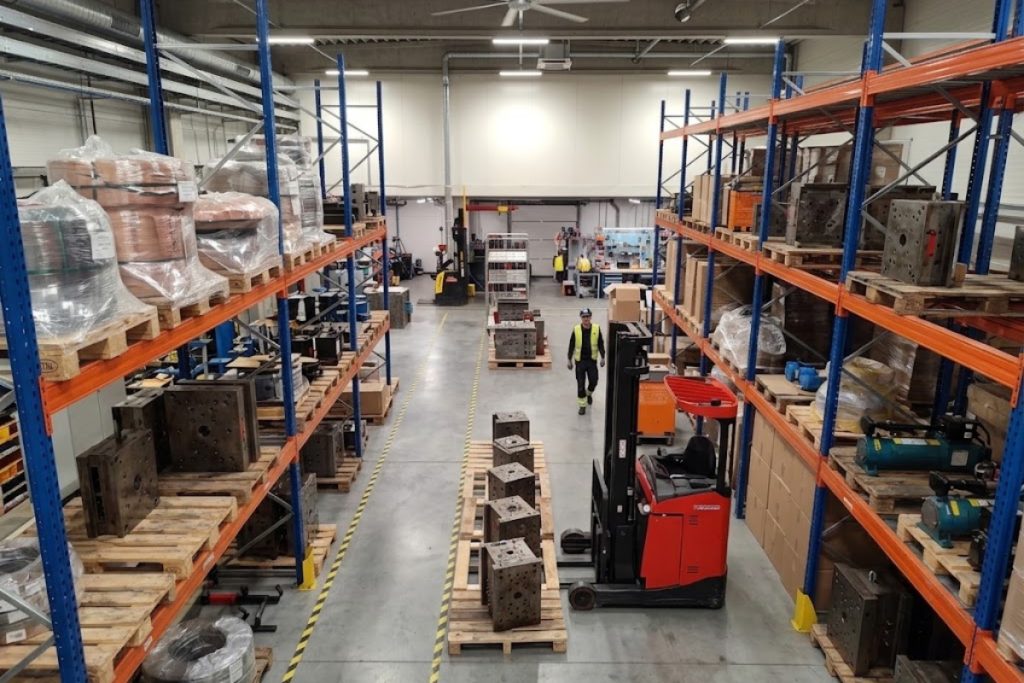
| Mould Type | Typical Lead Time | Primary Purpose | Common Materials |
|---|---|---|---|
| Prototype Moulds | 2 – 6 weeks | Testing, design validation, low-volume trials | Aluminium, additive resins |
| Bridge Moulds | 4 – 10 weeks | Market testing, clinical trials, initial orders | Higher-grade aluminium, P20 steel |
| Production Moulds | 8 – 20+ weeks | High-volume, long-term manufacturing | Hardened tool steels (H13, S7, 420SS) |
What Are the Typical Lead Times for Different Types of Moulds?
Understanding the timeline for each stage of mould development is essential for effective project planning and management. Since different mould types are designed for specific purposes, their development processes and lead times can vary considerably.
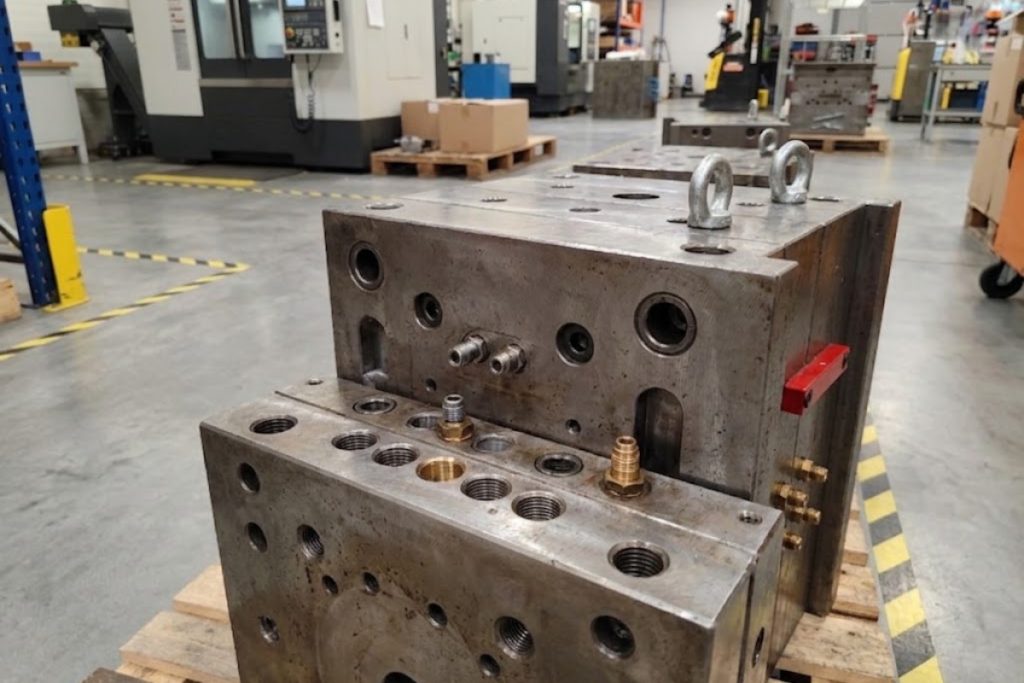
Prototype Moulds: Typically Between 2 to 6 Weeks
Prototype moulds are primarily used to produce limited quantities of components for testing, design evaluation, and validation. Their production lead times are generally shorter than those of production tooling, as they are intended for low-volume applications rather than sustained, large-scale manufacturing.
These moulds are commonly manufactured from less durable materials, such as aluminium, or produced using additive manufacturing techniques with high-performance plastic or ceramic resins. The use of these materials allows prototype moulds to be manufactured more rapidly and cost-effectively than conventional production tooling.
The typical lead time for a prototype mould is between two and six weeks, although the exact timeframe can vary depending on several factors, including the complexity of the component design, the selected mould material, and the manufacturer’s current production capacity.
Prototype moulds are particularly valuable during the early stages of product development. They enable engineers and design teams to evaluate a component’s functionality, fit, form, and overall performance before committing to the considerably greater investment required for full-scale production tooling. In sectors such as medical injection moulding, prototype tooling can be especially valuable for verifying the viability of a design and identifying potential issues before progressing to large-scale manufacturing.
Something important to bear in mind when sourcing injection moulded plastic components from a supplier or manufacturer, aside from the cost and quality considerations, as important as they are, it’s lead times that actually play a crucial role in the manufacturing process as well.
A simple delay in tooling can delay the product testing phase as one example. And by the same token, a delay in sampling can also postpone the approval process with clients. And a delay in the production process can ultimately lead to wholly undesirable outcomes for product launches, customer deliveries and inventory planning. Suffice it to say that lead times can adversely affect so many areas of a company’s day-to-day operations.
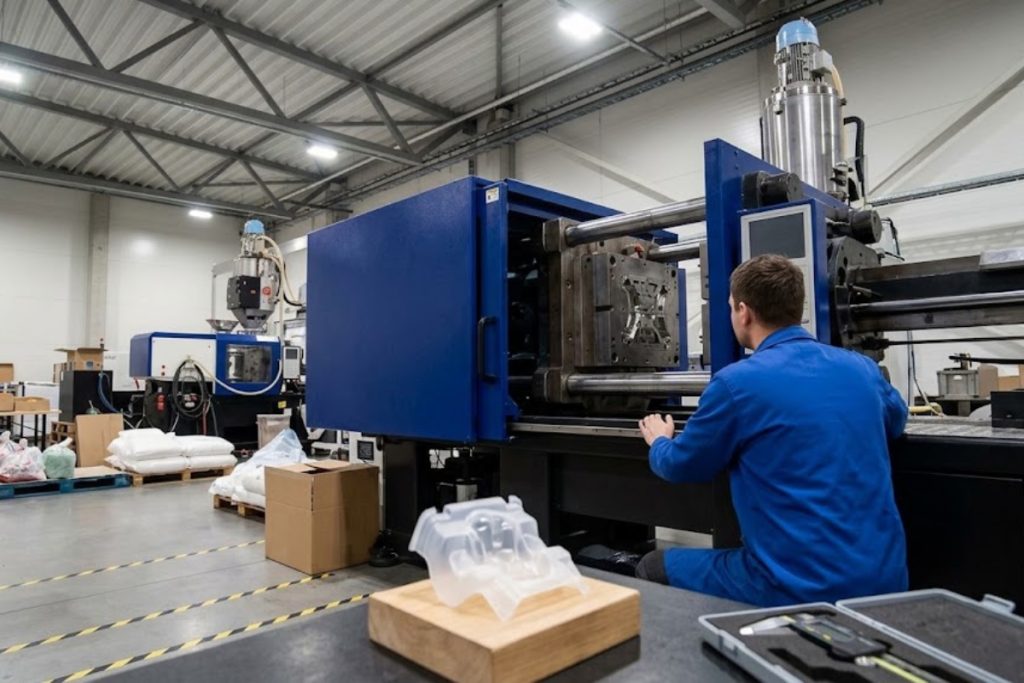
Bridge Moulds (Low-Volume Production): Around 4 to 10 Weeks
Bridge moulds, also known as bridge tooling or soft tooling, are commonly used for low-volume production runs. They are particularly useful for early market testing, clinical trials in the medical sector, or fulfilling initial orders while permanent production tooling is being developed.
Bridge moulds occupy a useful middle ground between prototype and production moulds. They offer greater durability than typical prototype tooling while remaining faster and more economical to produce than full-scale production moulds. Depending on the design and material, they may be capable of producing several thousand to tens of thousands of parts.
Lead times for bridge moulds typically range from four to ten weeks. This provides a faster route to production than conventional production tooling, while offering sufficient durability for low- to moderate-volume manufacturing. These moulds are often manufactured from higher-grade aluminium or P20 tool steel, providing a practical balance between manufacturing speed, durability, and service life.
Bridge moulds are particularly valuable when a product must undergo market testing or regulatory approval, such as the processes required for medical devices by the US Food and Drug Administration (FDA). They can also be used when manufacturers need to produce limited quantities before committing to full-scale production. Where future demand remains uncertain, or further design modifications are anticipated, bridge tooling can provide a cost-effective means of postponing the investment in more extensive production tooling.
Production Moulds: Typically 8 to 20 Weeks.
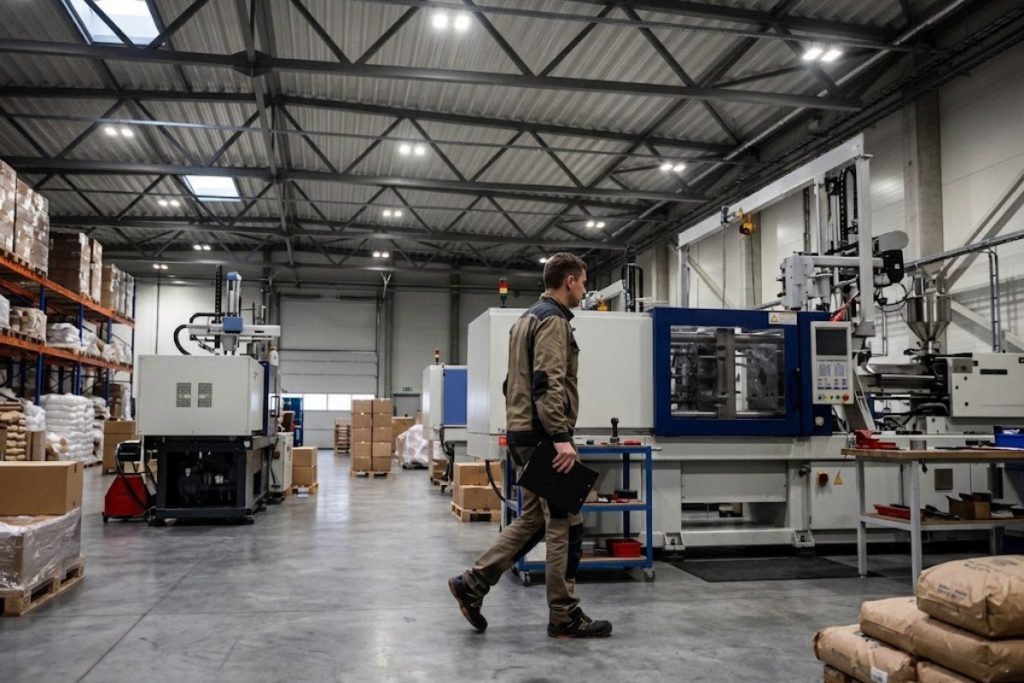
Production moulds are the most robust and durable form of tooling, designed specifically for high-volume and long-term manufacturing. They are typically manufactured from hardened tool steels, including grades such as H13 and S7, as well as stainless steel variants such as 420SS, which may be appropriate for medical applications or corrosive materials. These materials require greater precision during machining, heat treatment, and finishing, contributing to the longer lead times associated with production tooling.
The production of a mould can take between eight and twenty weeks, or longer in particularly complex applications. The precise timeframe depends on factors such as the intricacy of the mould design, the number of cavities, the inclusion of complex features such as side actions and lifters, surface-finish requirements, and the extent of testing and validation required before production can begin.
Production moulds must undergo comprehensive testing, qualification, and validation to demonstrate that they can withstand continuous, high-volume operation while consistently producing components that meet the required specifications. In medical manufacturing, for example, this may include Installation Qualification (IQ), Operational Qualification (OQ), and Performance Qualification (PQ).
These moulds are essential for large-scale manufacturing and are engineered to provide a long operational lifespan, often producing hundreds of thousands or even millions of components with a high degree of consistency and precision. Their design also focuses on maximising cycle efficiency and minimising maintenance and downtime throughout the product’s manufacturing lifecycle.
The interesting thing worth noting is that moulding lead times aren’t determined by a single factor. And are commonly the result of:
- Component complexity
- Tooling requirements
- Materials used
- Production volumes
- Quality requirements
All of these elements conspire in one way or another to influence how quickly a product moves from an approved design to fully-produced parts.
Understanding these factors can give purchasing teams a clearer overview of the production process, helping them plan with greater confidence and anticipate key considerations along the way.
When discussing the subject of manufacturing lead times, it is essential to establish what it is being measured.
For a new injection moulded component, the overall project may include:
- Design and design-for-manufacturing (DFM) review
- Tool design
- Tool manufacture
- Initial mould trials
- Sample inspection and testing
- Tool modifications, if required
- Customer approval
- Production preparation
- Series production
The time required for each stage can vary considerably depending on the project.
A relatively straightforward component with a commonplace design combined with simple tooling may progress at a much quicker rate than an altogether more complex design – i.e a design that has multiple cavities, and that requires strict tolerances and very specific materials can be a very different process.
For this reason, a supplier quoting a tooling lead time and a supplier quoting a complete project lead time might not necessarily be quoting the same thing.
When evaluating quotations, it is prudent to establish precisely what each supplier’s lead-time figure includes.
Component Design and Complexity
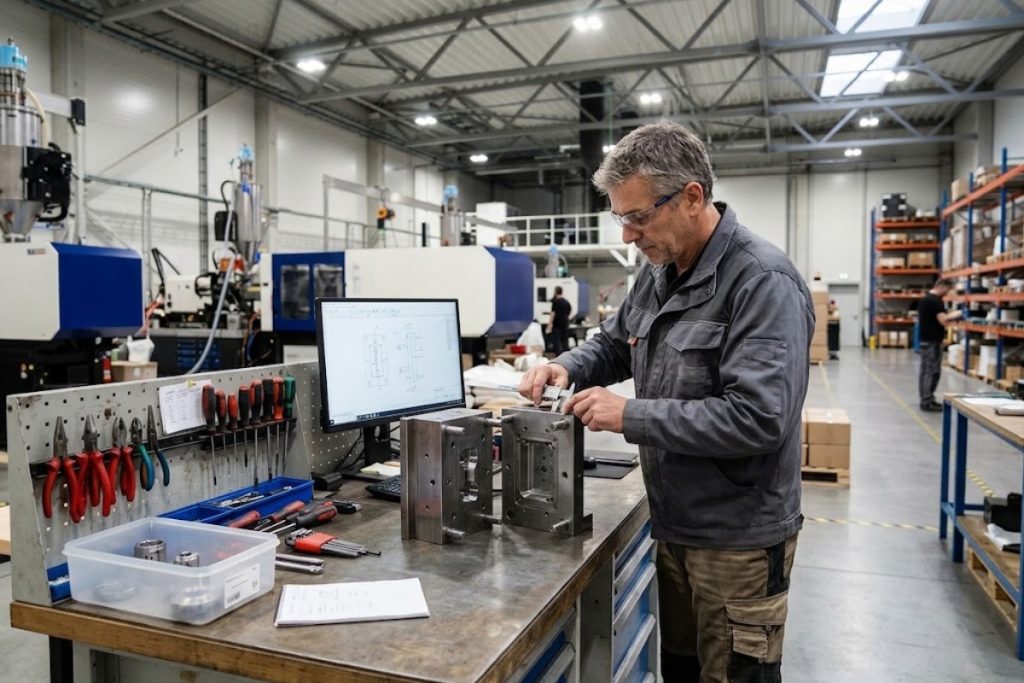
The actual design of the component itself has a decided influence on the complexity of the mould required to produce it.
A component that as rather simple in terms of its geometry may have relatively simple tooling requirements. Conversely, components that incorporate more complex elements such as undercuts, internal threads, complex surfaces, moving parts or other intricate shapes can require additional mechanisms within the mould.
These can often include:
- Slides
- Lifters
- Cams
- Complex ejection systems
- Additional machining
- EDM processes
Generally, more complex tooling can extend the time needed to get a mould ready for production, as the additional features and mechanisms involved can require more detailed design, manufacture and assembly.
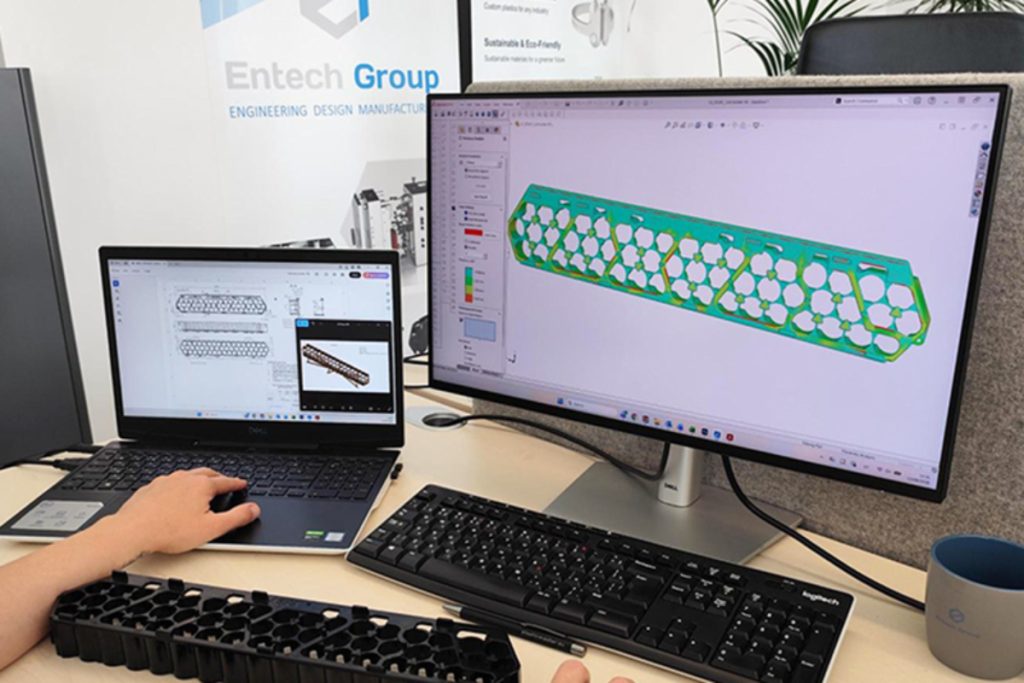
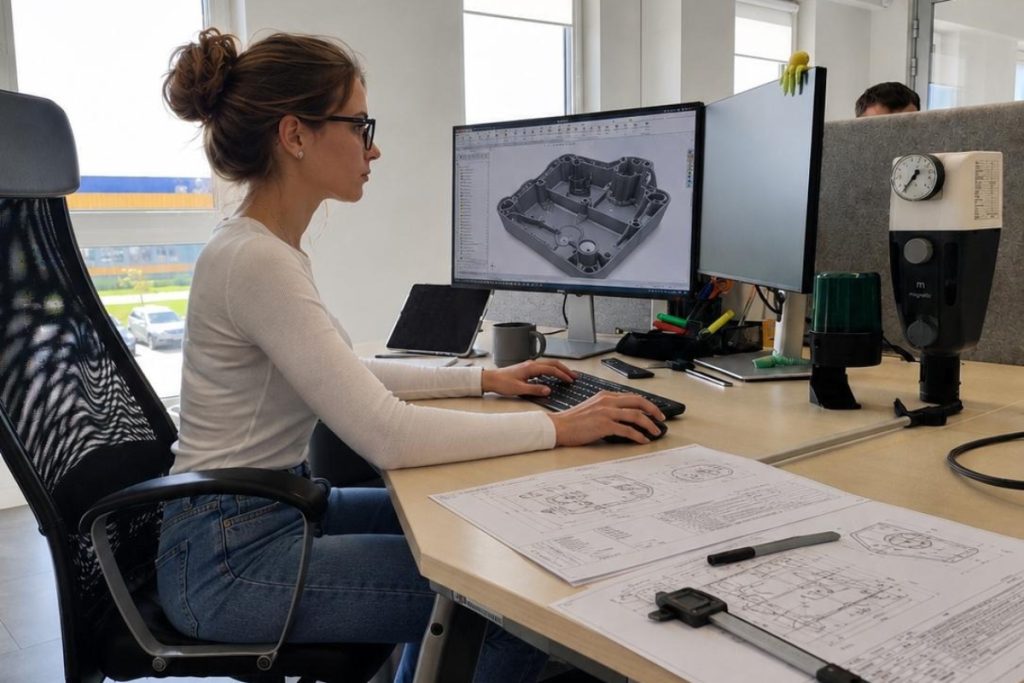
This is one of the reasons why it can be beneficial to involve the manufacturer prior to the tooling stage. A DFM review can identify any potential manufacturing issues whilst changes can still be made in the early stages of a project.
Design-for-Manufacturing Review
A component may appear completely suitable for production for the perspective of a design team, however challenges can still present themselves when it comes to the manufacturing process.
Wall thickness, draft angles, ribs, bosses, radii, parting lines and other design features can all influence the final manufacturability of a component.
The identification of such design issues is key to preventing delays before the tooling stage begins.
Making a design change during the developmental stage of a project is relatively straightforward when compared with discovering a problem after a mould has already been produced.
A thoroughly DFM review is not only advisable it can contribute to a more predictable project timeline by identifying potential problems before the arise.
Tool Complexity and Construction
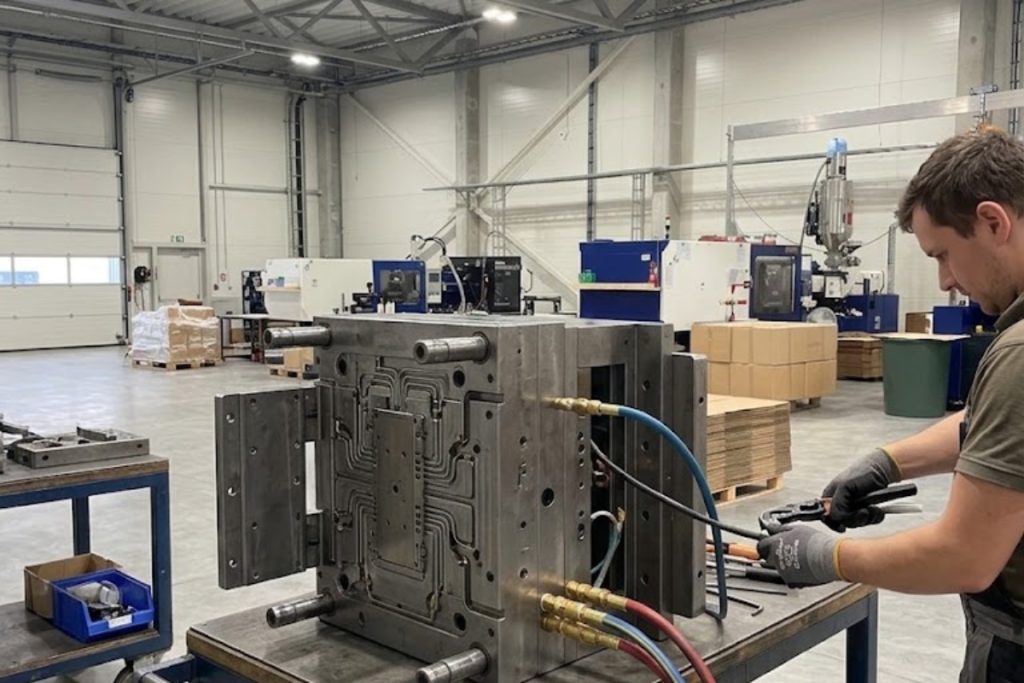
The mould itself is often one of the largest contributors to the overall project timeline.
Simple tooling might be relatively straightforward to manufacture, whilst more complex moulds can require much more during the various stages of its creation whether it’s design, machining, assembly and testing.
Various factors that can affect tooling lead time include:
- Number of cavities
- Part size
- Mould size
- Number and location of slides or lifters
- Runner system
- Cooling system
- Ejection system
- Surface finish requirements
- Dimensional tolerances
- Steel specification
- Use of inserts or other specialised components
A purchasing team should therefore be cautious about comparing tooling lead times based purely on the number of weeks quoted.
A very short lead time may look attractive, but it is important to understand what the supplier is including within that timeframe and whether sufficient time has been allocated for testing and subsequent modifications.
Mould Material and Tooling Requirements
The materials and specifications selected for the mould can also affect how long tooling takes to manufacture.
Different steels have different requirements when it comes to machining and heat treatment, whilst certain applications may require materials or surface treatments selected for durability, corrosion and wear resistance.
For high-volume production projects, for example, the priority may be durability and repeatability as opposed to achieving the shortest tooling lead time.
The important consideration is to be aware of such tradeoffs and choose an approach to the tooling stage that is project appropriate. Making decisions that are suitable for the entire production, rather than focusing solely on getting the first parts produced as quickly as possible. This can often ensure a much better outcome for a project in the long run
Material Selection
The plastic material selected for the component can also influence the project timeline. Different materials have different processing characteristics, shrinkage behaviour and temperature requirements. Engineering polymers and reinforced materials may require particular processing conditions and can place additional demands on the mould and production process. Material availability can also become a consideration, particularly where a specific grade, colour or specification is required.
For this reason, material selection should be confirmed as early as possible rather than left until tooling or production is already underway.
Sampling, Testing and Tool Modifications
Completing the mould is not necessarily the same as completing the project.
Once tooling has been manufactured, initial mould trials are normally carried out to produce samples for evaluation.
These samples may then be assessed for:
- Dimensional accuracy
- Appearance
- Material performance
- Fit and function
- Part weight
- Flash
- Warpage
- Sink marks
- Other production-related issues
If changes are required, the mould may need to be modified and another trial carried out.
This is one reason why a project should not be planned around the assumption that the first production trial will automatically produce a fully approved component.
Allowing appropriate time for sampling, inspection and potential adjustments can make the overall production schedule much more realistic.
Production Capacity and Machine Availability
Once the mould has been approved, production needs to be scheduled on a suitable injection moulding machine.
Machine availability can therefore influence production lead time.
The appropriate machine will depend on factors including:
- Required clamping force
- Component size
- Shot size
- Mould dimensions
- Production requirements
- Material being processed
A supplier with appropriate production capacity and good production planning may be able to move a project into series production more quickly than a supplier whose suitable machines are already heavily committed.
This is an important consideration when evaluating suppliers. Manufacturing capability is not just about owning the right equipment; it is also about having the capacity and processes to use it effectively.
Production Volume
Production volume can influence both tooling strategy and manufacturing planning.
A high-volume programme may justify multi-cavity tooling or greater investment in automation, whereas lower-volume production may call for a different approach.
The production volume should therefore be established early in the project.
If expected volumes change substantially after tooling has been designed, the original tooling or production strategy may no longer be the most appropriate one.
What Can Cause Injection Moulding Projects to Be Delayed?
Although every project is different, many delays can be traced back to a relatively small number of issues.
Late design changes
Changing the component after tooling has started can result in additional tool modifications and additional sampling.
Unclear specifications
Unconfirmed materials, tolerances, surface finishes or cosmetic requirements can create uncertainty during tooling and production.
Delayed approvals
A supplier may complete samples on schedule, but production cannot proceed until the customer has reviewed and approved them.
Tool modifications
Problems identified during initial trials may require additional machining or adjustments before the component is ready for production.
Material availability
Specialised materials, colours or grades may have longer procurement times than standard materials.
Limited production capacity
A supplier may have the technical capability to manufacture the component but limited availability on the appropriate machine.
These issues are not necessarily signs of a poor supplier. Some are simply inherent to the development and manufacturing process. The important thing is that they are identified and accounted for in the project plan.
How Can Buyers Help Reduce Lead Times?
The supplier is responsible for managing the manufacturing process, but purchasing and engineering teams can also have a significant influence on how efficiently a project progresses.
Provide complete information at the beginning
Providing accurate CAD files, technical drawings, material specifications, expected volumes and quality requirements allows the manufacturer to assess the project properly from the outset.
Involve the manufacturer early
Early supplier involvement can allow potential manufacturing issues to be identified before tooling begins.
Establish clear acceptance criteria
Both parties should understand what constitutes an acceptable component before samples are produced.
This is particularly important for cosmetic requirements, dimensional tolerances and functional characteristics.
Minimise changes once tooling begins
Changes made after tooling has started can have a disproportionate effect on the schedule.
The more decisions that can be finalised before tooling begins, the more predictable the project is likely to be.
Allow sufficient time for sampling
Trying to remove all contingency from a tooling programme can create problems later.
A realistic schedule should allow time for initial trials, inspection and any necessary modifications.
Should You Choose a Supplier Based on the Shortest Lead Time?
Not necessarily.
Lead time is an important factor, but it should be considered alongside quality, cost, manufacturing capability and reliability.
A supplier promising the shortest possible tooling programme may not necessarily provide the fastest route to approved production parts.
For example, a tooling programme that takes slightly longer but includes thorough DFM, appropriate tooling design and adequate testing may ultimately reach production sooner than a rushed programme that requires multiple modifications.
When comparing suppliers, purchasing teams should therefore ask:
- What does the quoted lead time include?
- Does it include tooling trials?
- How many sampling stages are anticipated?
- What happens if modifications are required?
- When can series production begin?
- Is the required machine capacity available?
- Who is responsible for DFM and tooling approval?
- What information is required before the lead time officially begins?
These questions can provide a much clearer picture of the realistic project timeline than simply comparing the number of weeks shown on a quotation.
Lead Time Is About Predictability, Not Just Speed
The fastest possible manufacturing programme is not always the best programme.
For OEMs and purchasing teams, what matters is often the ability to establish a realistic and dependable production schedule.
A supplier that understands the component, identifies potential manufacturing issues early, communicates clearly and manages tooling and production effectively can help reduce uncertainty throughout the project.
At PlasticMaster, we understand that injection moulding projects involve more than simply producing parts. The tooling, materials, production requirements and quality expectations all need to work together to achieve a successful result.
By considering lead time from the beginning of a project – rather than treating it as something to address once the mould is complete – OEMs can make better-informed sourcing decisions and reduce the risk of avoidable delays.